Our complete holiday party guide covers the timeline, the budget and the formats. This article answers a different question, the one that comes up once the budget is approved: how do you keep this year’s party from being a copy of the last four.
The answer rarely comes down to a bigger budget. It comes down to format, the rhythm of the evening, and a few decisions that cost almost nothing.
Start with the format, not the theme
This is the most common mistake. A theme gets chosen, money goes into décor in an attempt to change the dynamic, and the exact same evening runs underneath: a 30-minute cocktail, a two-hour seated dinner, speeches, music, done.
Format shapes the experience far more than decoration does. Here are the options that actually change something.
The cocktail-style reception with stations
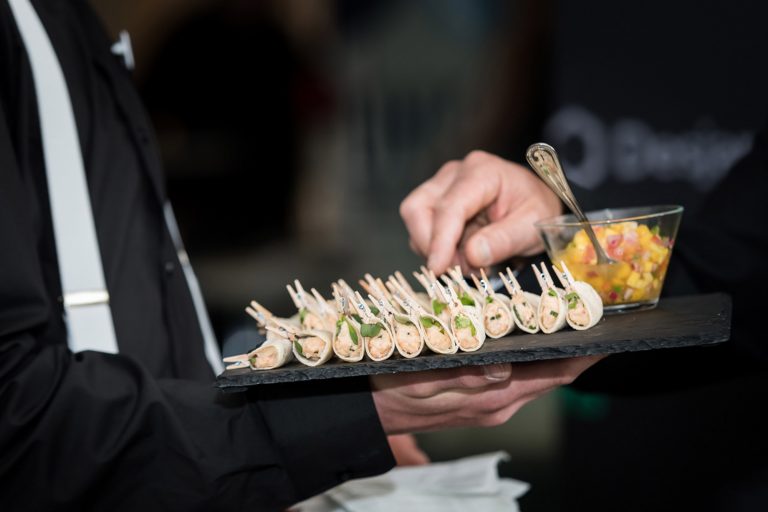
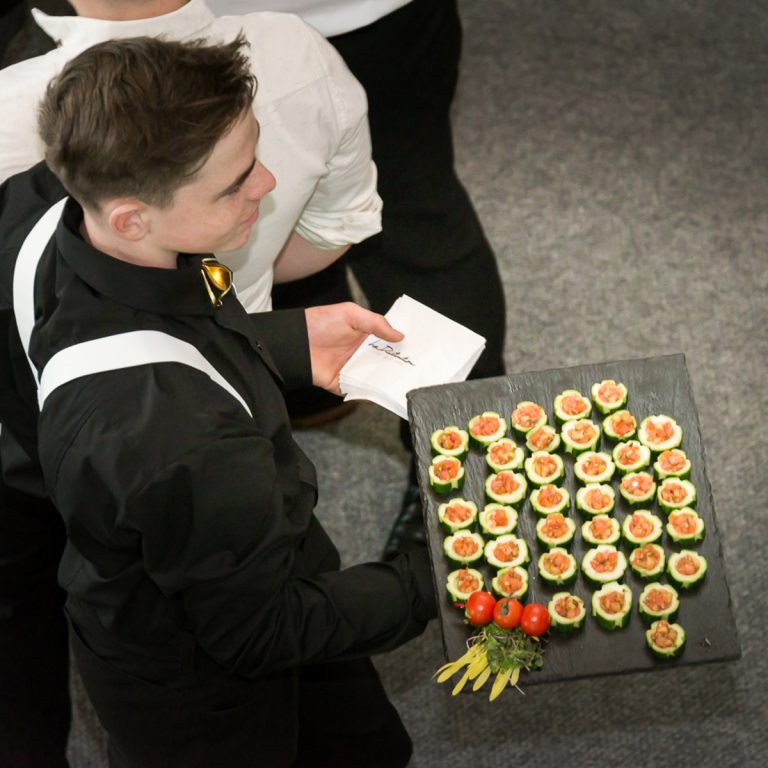
Nobody is seated in a fixed spot. Canapés circulate, stations draw people to different parts of the room, and groups reshuffle naturally.
The concrete effect: your employees talk to colleagues they never cross paths with. A seated dinner does the opposite, freezing tables for two hours and reproducing the organization’s silos and cliques.
This is the format to favour if your goal is to mix your teams.
The hybrid format
An extended cocktail reception, then a short seated segment for speeches and recognition, then back on foot for the evening.You keep the structure official announcements require without immobilizing everyone for two hours. It’s a good compromise for organizations attached to their awards.
The daytime party
A festive lunch or a full afternoon rather than an evening. It reaches employees with children, those with long commutes, and evening or weekend crews who are systematically left out of the Friday-night party.Attendance often rises noticeably. It also costs less.
The January party
December is saturated, personal calendars are full, and employees arrive exhausted. A January party lands in an empty month, with rested teams, better availability and softer rates.
Entertainment: bet on what happens, not on what people watch
Entertainment people watch passively creates a moment. Entertainment people take part in creates conversations.
What works
Live culinary stations. A cook finishing a dish in front of guests, a guided tasting, a canapé bar assembled on the spot. The meal becomes the entertainment, which avoids adding a separate budget line.
Recognition done well. Three five-minute moments, with specific examples and names, beat an hour of general presentations. Naming one person for something concrete lands harder than a generic award.
Short activities in mixed teams. Twenty minutes maximum, with teams formed at random rather than by department. It breaks the ice without turning the party into a training day.
A good DJ. Someone who reads your company’s vibe and gets everyone taking part, with icebreaker games placed at the right moment.
What works less well
Long awards segments. Activities that require speaking in front of everyone, which exclude more reserved people. Mandatory costume contests. And music that’s too loud too early, which kills conversation before people have even talked.
Themes: concrete rather than generic
A generic theme is obvious right away: casino, Hollywood, the eighties. It works, but it could be any company.
A theme rooted in your organization produces a party that looks designed for this specific group:
The past year as a through-line, with notable projects woven into the décor and the recognition moments
A nod to what the company actually does, handled with humour
A year-end celebration rather than a Christmas party, which includes everyone with no extra effort
A theme chosen by employees themselves through a vote, which settles buy-in in advance
Three decisions that change the evening without costing much
Assigned seating, but mixed. If you’re committed to a seated dinner, don’t let people sit by affinity. A floor plan that mixes departments completely changes the evening’s conversations.
Real non-alcoholic options. Not juice in a plastic cup. Mocktails built with the same care as the cocktails. A meaningful share of your employees don’t drink, and the usual offering tells them they’re an exception.
The ride-home plan announced in the invitation. Shuttle, designated drivers, taxis. When it’s announced ahead, nobody has to ask, and the evening can run long.
Frequently asked questions
How do we make an office party memorable without a big budget?
Change the format before adding décor. Moving from a seated dinner to a cocktail reception often costs less and transforms the experience more.
Do we need entertainment on top of the meal?
It depends on your group and on the direction you want the evening to take. Entertainment done well loosens people up and brings everyone together.
How do we include employees who work evenings or weekends?
A daytime party or festive lunch solves much of the problem. Otherwise, plan a second occasion suited to their schedule rather than accepting that they don’t come.
Should a theme be mandatory?
No. An optional theme, with a suggested colour or accessory, gets better participation than a required costume.
How far ahead should we book?
For December, from September. For a January party or a weekday date, October still leaves options. The details are in our complete holiday party guide.