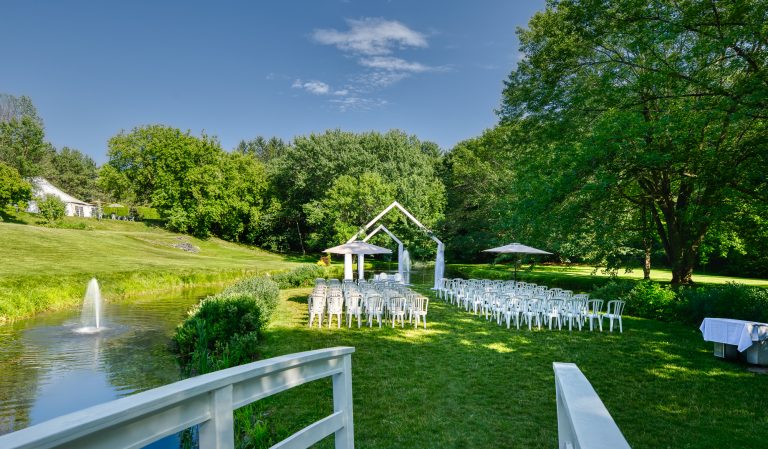

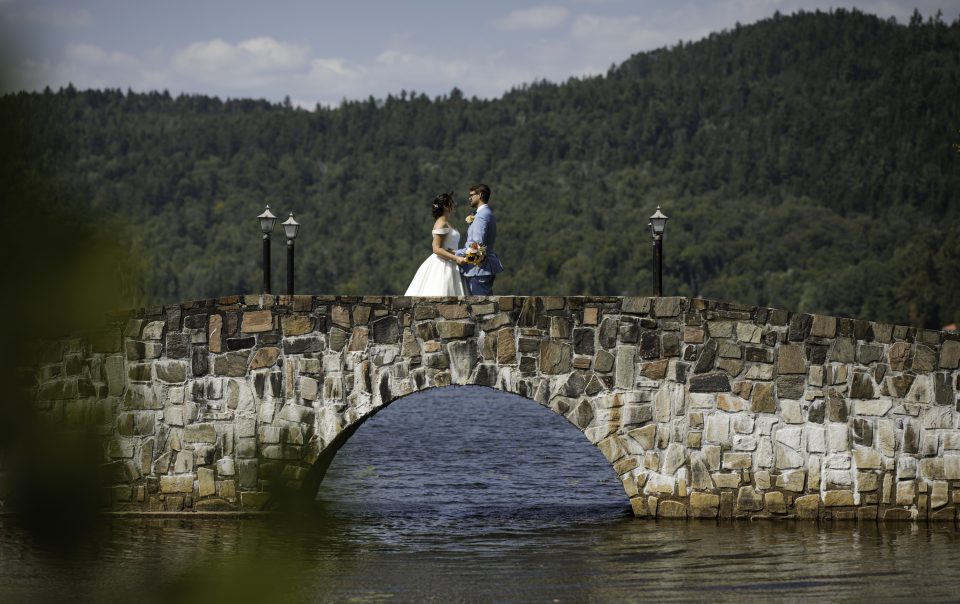
Looking for a region with nature, character and room to celebrate without asking your guests to drive for hours? Lanaudière is a strong middle ground. About an hour from Montreal, the region brings together farmland, forests, mountains and charming villages, along with a well-established reception offer for many different wedding styles. This guide looks at the practical questions: which part of the region to choose, what type of venue fits your plans, the best season to celebrate, how to handle guest logistics and where to begin.
What couples often appreciate first is the balance. Lanaudière is close enough to Montreal for guests to drive back the same evening, but far enough to feel like a change of scenery. Around Joliette, the setting is more rural, with fields and quiet country roads; farther north, toward the Matawinie, lakes, forests and mountains give the day a completely different feel.
Another advantage is space. Outside the city, it is often easier to find larger grounds, more generous rooms and parking that does not become a logistical issue. The budget does not disappear, of course, but it can often be used differently: a better on-site experience, an outdoor ceremony or a reception that feels less constrained. Summer Saturdays remain popular, even here, but the range of options is usually broader than in central Montreal.
The heart of the region brings together many of the reception halls, caterers and services. It is the most practical choice: direct access via Highway 40 and Route 31, accommodations nearby, and vendors who are used to working together. The surrounding countryside also offers simple, rural photo settings without having to travel far.
As you head toward Rawdon, Saint-Côme or Saint-Donat, the scenery becomes more striking: mountains, rivers and wide stretches of forest. This area works well for couples who want the wedding to feel like a short getaway, often with the celebration extending over a weekend at an inn. Just plan for a slightly longer drive and give guests clear lodging information early.
Terrebonne, Mascouche, Repentigny: if most of your guests are coming from Montreal or Laval, the southern edge of the region keeps travel to a minimum while still feeling more open than the island.
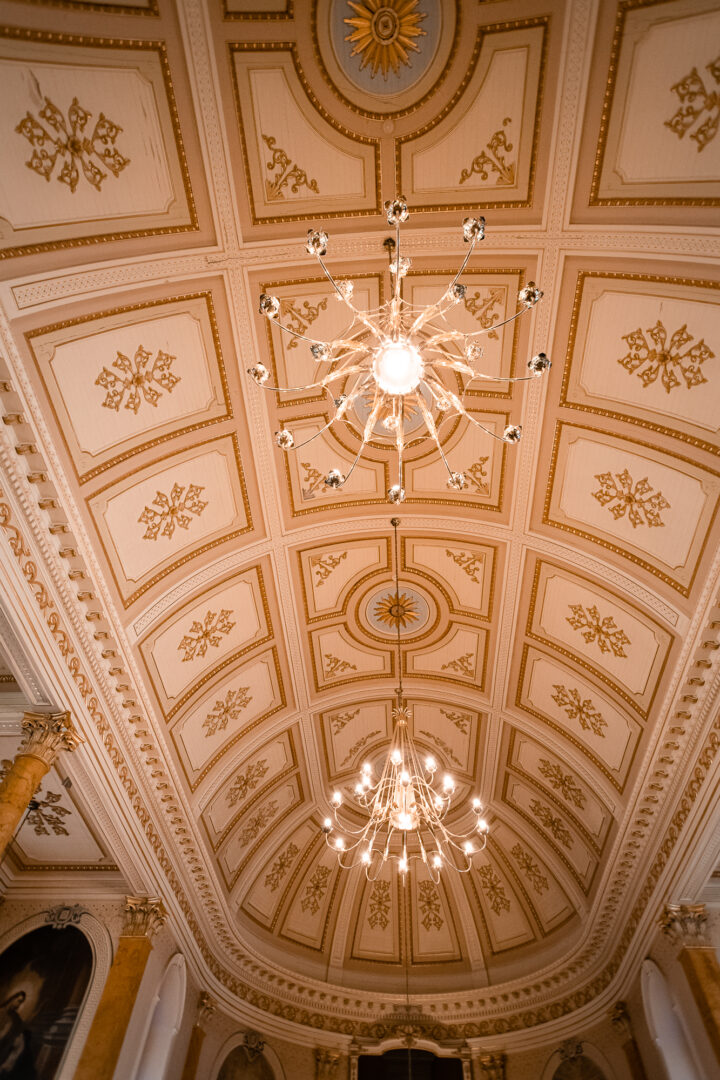
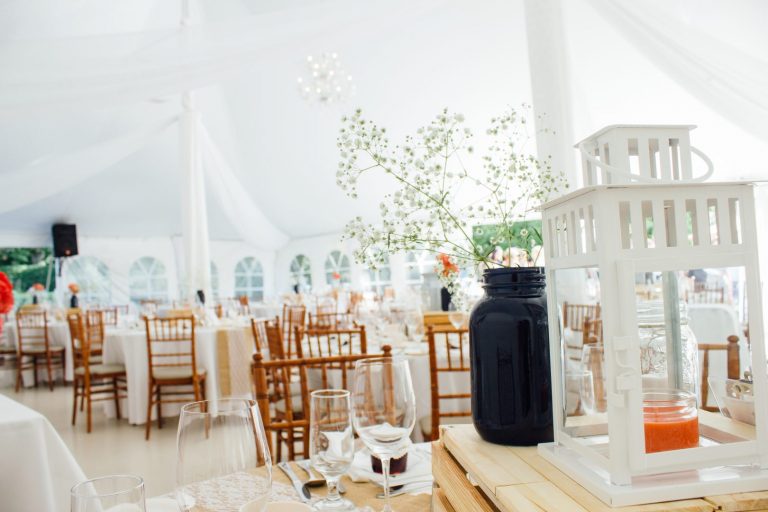
Your venue determines the atmosphere, the budget and much of the logistics. Four families of venues dominate the local offer:
Before signing, ask every venue the same questions: real seated capacity, end-of-night time, in-house or outside catering, weather backup plan, accessibility and parking.
Summer remains high season: mild weather, outdoor ceremonies, long evenings. It is also when venues and vendors book up first; for a July Saturday, couples often reserve more than a year ahead.
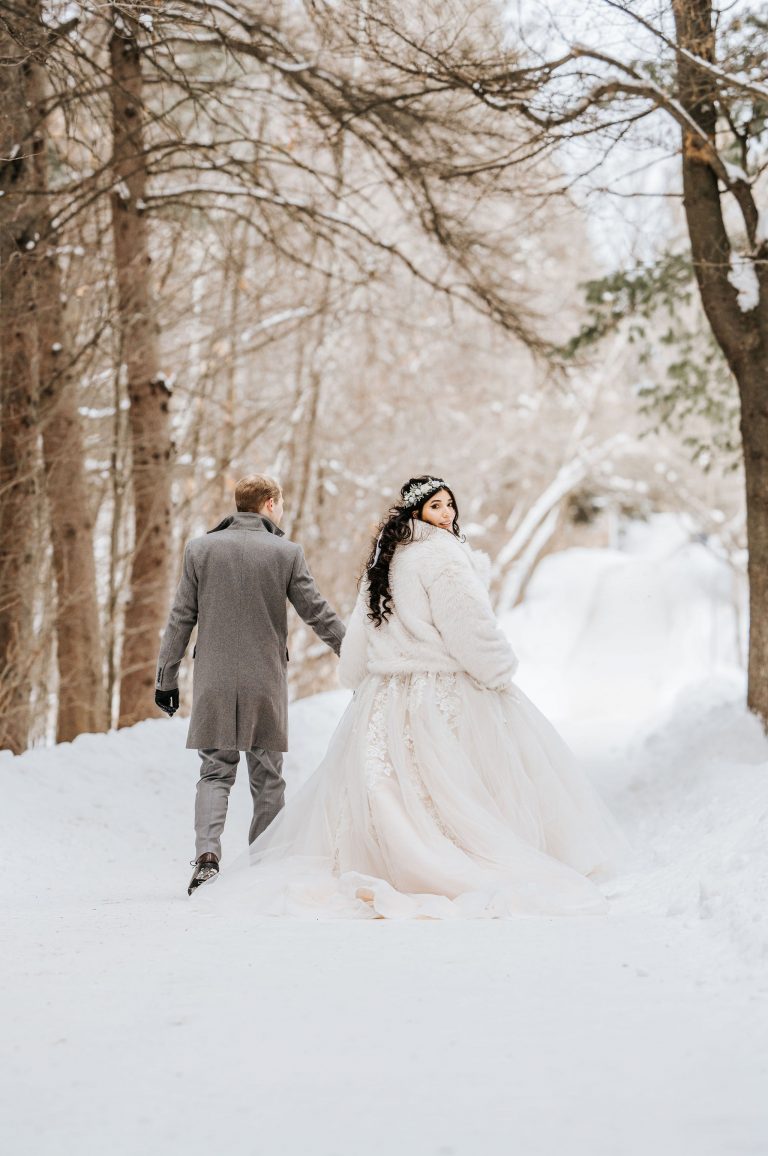
Fall continues to grow in popularity, and for good reason: the region’s sugar bushes and mountains offer a naturally beautiful backdrop. Winter is often underestimated: availability is usually better, rates can be softer, and the snowy setting gives the reception a more intimate feel. Spring suits couples who want milder weather without peak-season pressure, keeping in mind that nature wakes up later in the northern part of the region.
The question comes up often, especially when several guests are coming from Montreal, Laval or the North Shore: will the distance complicate the evening? Usually, no, as long as it is planned from the start. Include the real driving time on your invitations, suggest carpooling or a shuttle for the end of the night, and reserve a small room block if part of the group wants to stay in the region.
A regional wedding is also a chance to let guests taste where you are celebrating. Lanaudière has many producers: maple syrup, fine cheeses, microbreweries, orchards and market farms. A menu built around these products gives the reception a stronger sense of place, while reflecting the growing interest in local, seasonal choices.
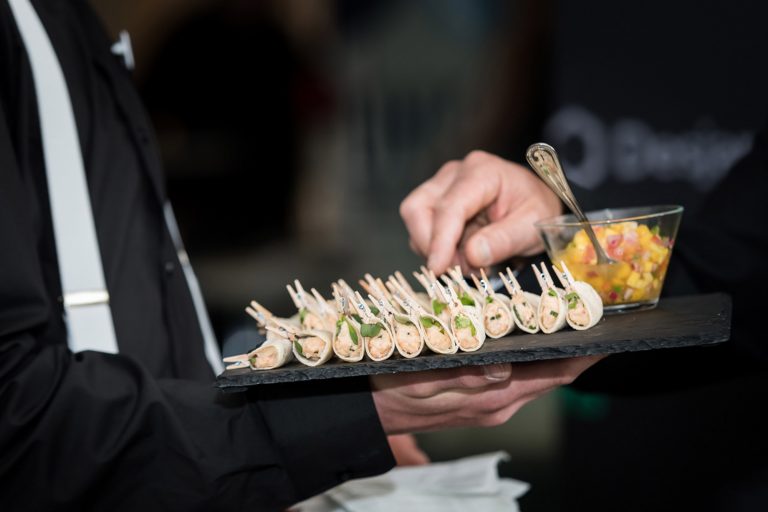
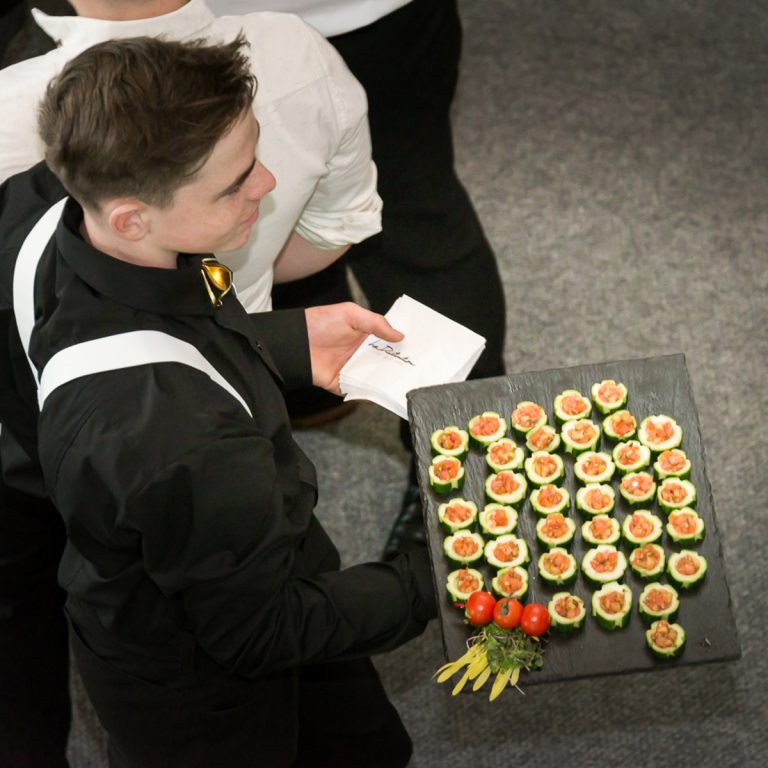
Several caterers in the region, including La Distinction in Joliette, host tasting evenings: take advantage of one to taste before you choose, and ask what comes from local producers and how the menu adapts to the seasons.
Getting married in Lanaudière doesn’t automatically mean spending less; fine food and quality service cost what they cost, everywhere. The difference lies in space and flexibility: venue rental is generally more affordable than in Montreal, and the offer covers every format, from intimate weddings to grand tented banquets. Keep an eye on three line items: guest transportation, lodging, and travel fees for some vendors outside the central areas. For detailed cost ranges, see our guide on wedding costs in Quebec.
Before diving into Pinterest boards, start with three simple decisions: the season, the venue and the caterer. The season affects which venues are realistic; the venue sets the capacity, style and part of the logistics; the caterer should be booked early, especially for summer. Once these choices are made, flowers, music, décor and coordination become much easier to organize. If you do not want to carry everything yourselves, a planning or day-of coordination service can also make a real difference.
It depends on the area: about 45 minutes for the North Shore suburbs, around an hour for Joliette, and a bit more for the Matawinie mountains, depending on traffic.
For a Saturday between June and September, aim for 12 to 18 months ahead for the venue and caterer. Off-season or on a weekday, a few months is often enough.
Yes, it’s one of the region’s biggest draws. Always plan an indoor or tented backup, and confirm the practical details (sound, chairs, accessibility) with your venue and officiant.
An excellent one, if you love a cozy atmosphere: snowy scenery, firesides, better availability and often better rates. Make sure the venue is truly winter-ready and make travel easy for your guests.
No. Most Montreal guests drive home at the end of the night. Reserve a small block of rooms for close family and anyone extending the celebration, and arrange a shuttle for the rest.