Hosting the Holidays Without Cooking: How Holiday Catering Works
Hosting twelve, twenty or thirty people over the holidays usually means two days of prep, a full day in the kitchen, and a host who finally sits down at dessert.Catering removes that part; what holds people back is not knowing how it works: when to order, what to choose, how much to plan for, and what stays on their plate. Here are the answers.
When to order
This is the point that costs latecomers the most.Holiday orders concentrate into a few weeks, and the most requested dates are the mid-December weekends and December 24. Those fill first.
A realistic timeline
Late September to October: when you still have full choice of menu and date. It’s also when you can ask questions without pressure.
Early November: still fine for most dates, tighter for weekends.
Late November: popular dates are generally gone. You choose from what’s left.
December: possible for some formats, with short lead times and limited choice.
Booking early doesn’t commit you to a final headcount. That number is confirmed later: you have until five days before the event to reduce your guest count with no cancellation fee.
Choosing your format
The word “catering” covers several realities that involve very different levels of service.
Reheat-at-home dishes
You receive prepared dishes, reheat them per the instructions, and serve. It’s the simplest and least expensive format.
It suits family meals, receptions where you want to keep things informal, and hosts with a functional kitchen and a bit of time on the day.
What it requires: oven and refrigerator space. That’s the constraint people most underestimate.
Delivered and set-up buffet
Dishes arrive ready to serve and are set up on site. Nothing to reheat or plate.
This is the format with the best effort-to-result ratio for a mid-sized group.
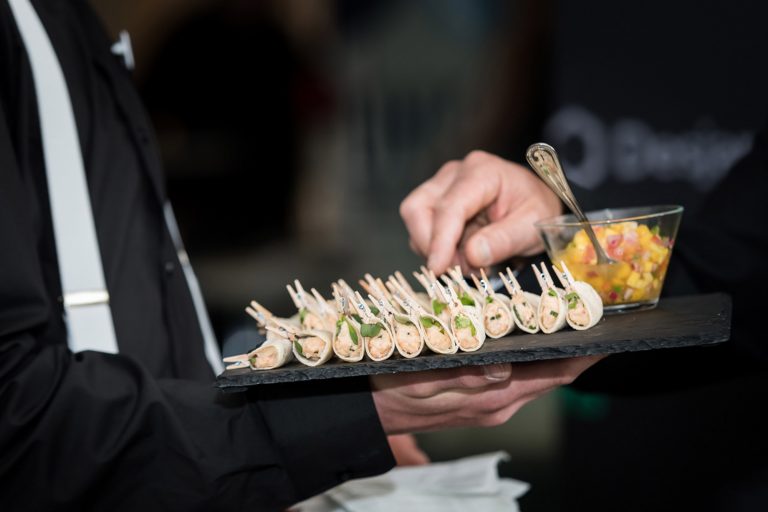
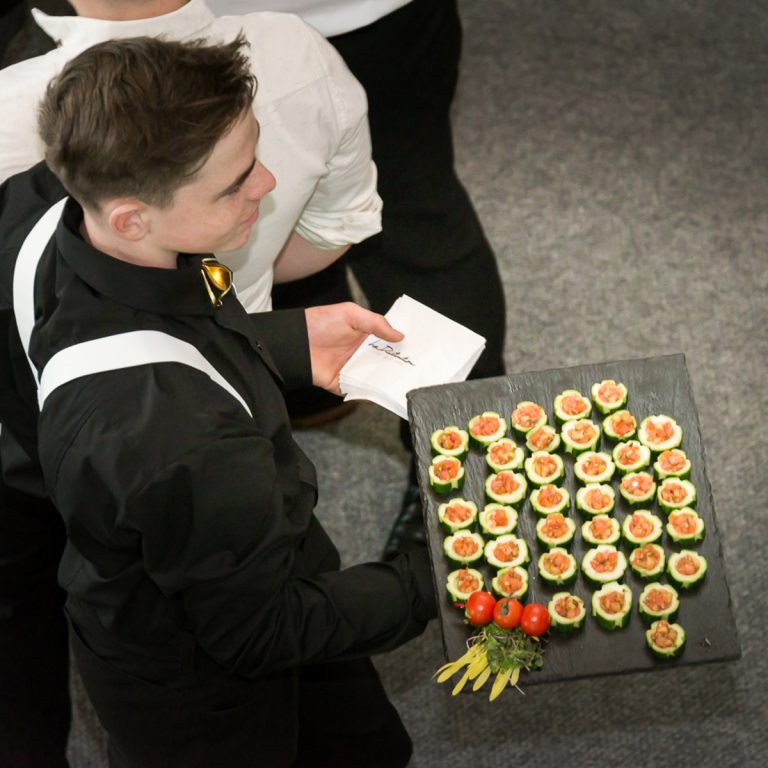
Canapés and cocktail-style receptions
For a standing reception, a holiday 5 à 7, or an evening with no seated meal and none of the dishes and cleanup that come with one. Quantities are calculated differently from a full meal: we’ve published a detailed guide on how many canapés to plan per person.
On-site service
One or more staff members come to your home for service, and sometimes to finish the dishes.That’s what our Distinction chez vous service covers, offered for an additional $32 per person. It’s the format to choose if you want to be a guest at your own reception.
How much to plan for
Quantities are the second source of hesitation, after lead times.
A few general benchmarks:
For a full meal, count on your confirmed guest number, not the number of invitations sent. The caterer already builds in a margin.
For a cocktail reception, the calculation is per canapé per person, based on the length of the reception.
Flag dietary restrictions when ordering or during planning, not at delivery: vegetarian, major allergies, intolerances.
Children count, but not as adults. Mention it when ordering.
The instinct to order “a bit extra just in case” is expensive and usually ends up in the garbage. A caterer who knows the work already accounts for margin.
Delivery, transport and what’s left to do
What the caterer handles
Preparation, cooking, transport-ready packaging, delivery, and depending on the format chosen, setup and service.
What stays on your plate
This is the part people sometimes discover late:
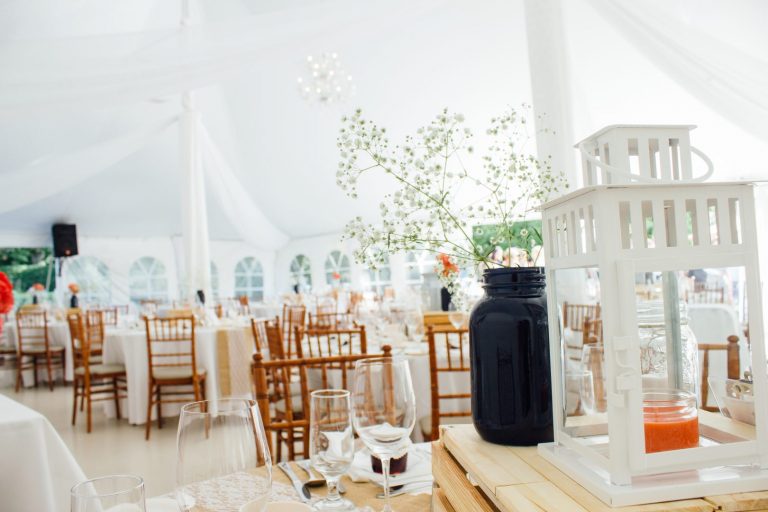
Setting the table, bringing out dishes and cutlery, unless you add the full place-setting package, offered at $12 per person
Beverages, alcohol, ice, glassware
Welcoming guests and running the evening
Cleanup afterward, or returning the tableware to the caterer if it isn’t included in your package
The caterer removes the cooking. It doesn’t remove the whole of the organizing, and it’s useful to know that beforehand rather than after.
What it changes for the host
The calculation isn’t only financial. Weigh the cost of catering against what you get back:
Preparation and shopping time, often two full days for a large reception
The real ingredient cost for an equivalent menu, which often surprises people
Holiday-season stress, in an already loaded period
Actually being present at your own reception
For a small group, cooking often remains the better option. From about fifteen people up, the gap narrows quickly.
Frequently asked questions
How far ahead should we order holiday catering?
Ideally from late September or October for full choice. By November, popular December dates are often taken.
Can the guest count change after ordering?
Yes. At La Distinction, you have until five days before the event to remove guests with no cancellation fee. After that, fees apply, because the food orders are already committed.
Do we need to supply the tableware?
Usually yes. Otherwise the caterer can supply it for a per-setting fee: $12 per person for the full place-setting package.
Does it cost more than cooking ourselves?
It depends on group size. For six people, cooking stays more economical. For twenty-five, the gap narrows once you count ingredients, time and waste.
Can we order for a small gathering?
Yes, subject to a minimum of 15 guests depending on the format.