Plated banquet, buffet, cocktail-style reception, food stations, BBQ, brunch or lunch boxes: the meal format shapes your event’s atmosphere as much as the menu itself. The same group will live a completely different evening seated before a five-course meal or standing around gourmet stations. Here is every format a caterer offers, each one’s strengths, limits and the contexts each one suits, so you can choose with your eyes open.
How to choose: four questions first
What’s the event’s purpose? Networking needs people moving; honouring someone needs them seated.
How much time do you have? A business lunch runs an hour; a wedding lasts all evening.
Who are your guests? Busy colleagues, families with children, older guests: each profile has its format.
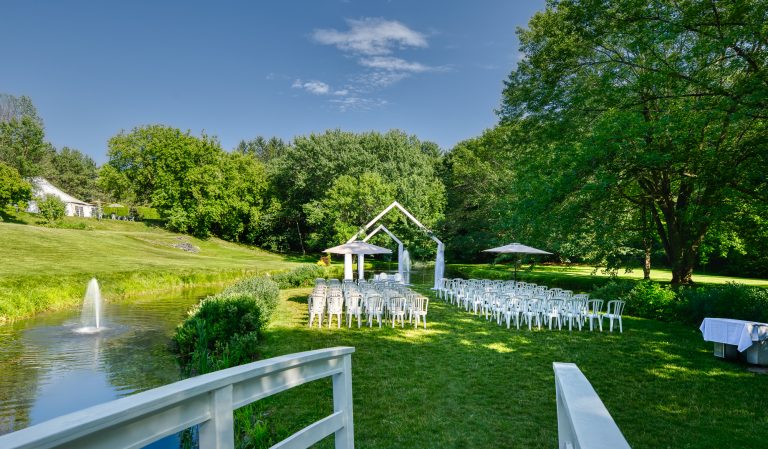
Where are you hosting? An equipped hall, a tent, your office or your backyard changes the logistics entirely.
Seated meals: the 3-to-7-course banquet
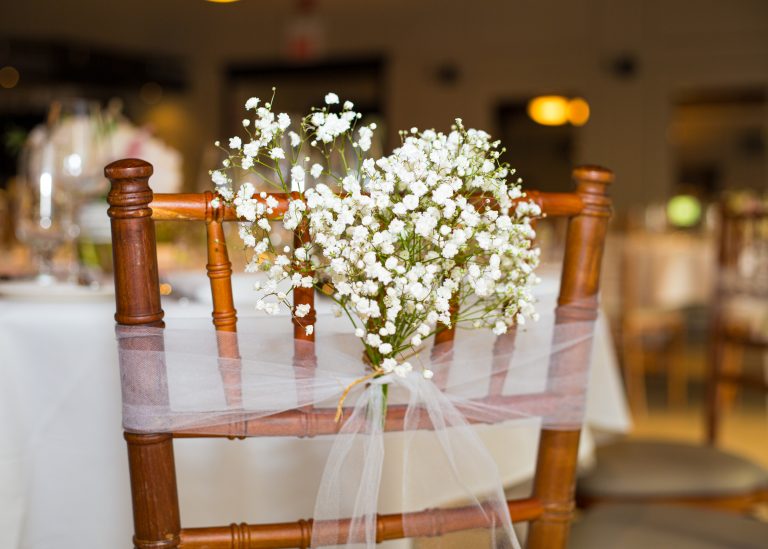
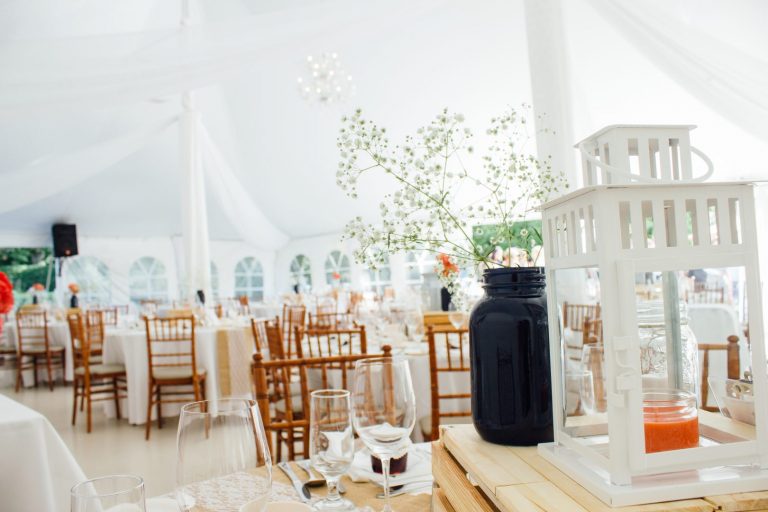
The flagship formula for weddings, galas, benefit dinners and recognition evenings. Table service avoids circulation when space is tight or the group is large, and suits older guests and young families especially well. On the plate, the gourmet banquet is composed à la carte: canapés, appetizers (for example, a regional cheese fondue), soups (for example, lobster bisque), granités, some twenty main courses, fine or regional cheeses and desserts; up to seven courses are available for grand occasions.
Signature menus: seasons and terroir
Beyond the formats, the menu itself can carry a signature: a seasonal menu that follows the harvest, a holiday menu that revisits Quebec tradition in gourmet form, or a Goûtez Lanaudière menu that showcases the region’s producers. These menus apply to most formats, a beautiful way to theme your event without touching the décor.
Buffets: three variants, three uses
The hot buffet
Everyone tastes everything and goes back for more: light eaters and picky ones alike are well served, and waste goes down. A buffet also gets people moving, an asset for breaking the ice between two families or two departments. And no, buffet doesn’t mean lower quality: a high-end caterer serves the same fresh products as in a banquet.
The cold buffet
The cold buffet, the ally of efficient days: training sessions, conferences, business meetings or family gatherings. Daily salads, sandwiches, pastry-chef sweets and seasonal fruit let everyone get back to business quickly, with possible add-ons (appetizers, regional cheeses, vegetarian options).
The late-night buffet
The late-night station, the must-have of weddings and long evenings: snacks, mini burgers, candy bar, poutine bar, ice-cream stand, even a campfire with marshmallows. The content is entirely up to you; it’s the party’s second wind.
The best formats
Convivial formats: BBQ, brunch and breakfast
An on-site BBQ, prepared and served by the caterer, turns a birthday, christening or product launch into a country feast: salads, two meat choices (land or sea), market vegetables, regional cheeses and desserts, with a vegetarian option like cauliflower steak in red curry. Brunch keeps gaining popularity for post-wedding mornings and gentle family celebrations; the business breakfast starts meeting days on the right foot.
Standing formats: cocktail reception and stations
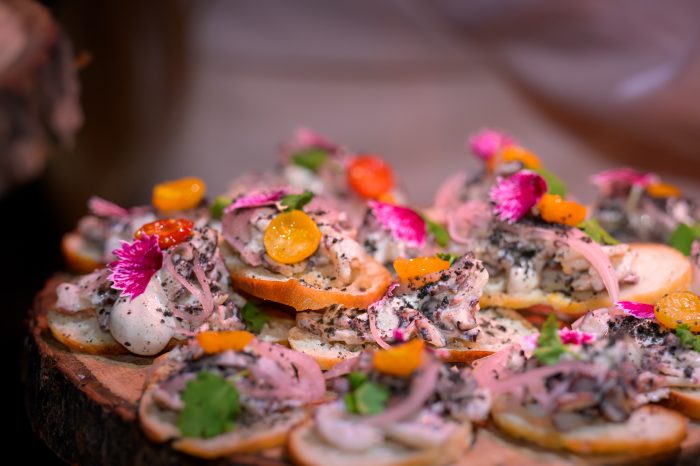
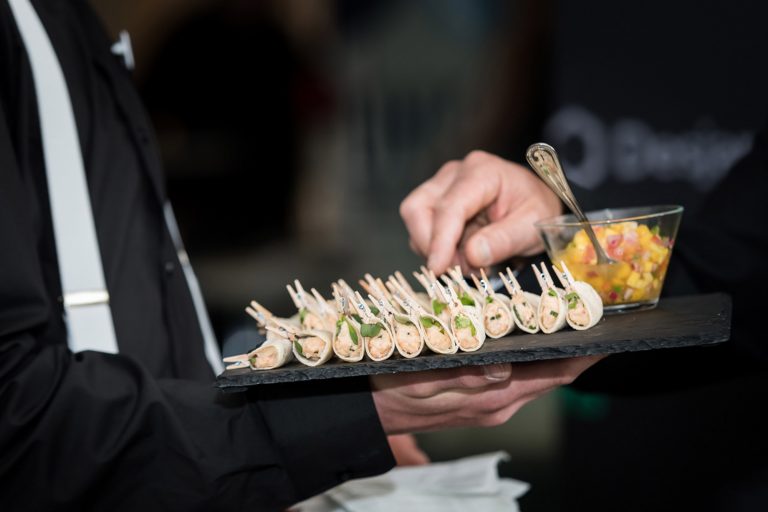
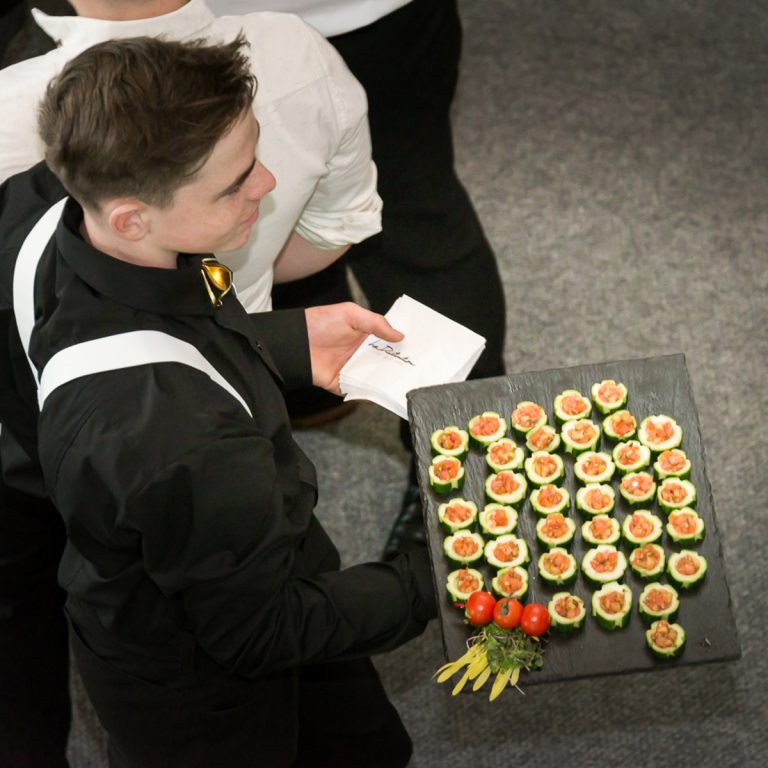
he cocktail-style reception replaces the seated meal with a continuous flow of refined canapés: perfect for networking, celebrating with a large group in a tight space, or giving the evening a chic, mobile feel. Food stations add the show: themed counters where everyone composes their plate as the evening unfolds. These formats demand precise quantity planning; our guide on canapés per person will help.
The practical format: the gourmet lunch box
The lunch box for meetings, training days, film sets or events on the move: a complete, refined, individual meal with zero service logistics. The gourmet version is nothing like a sad sandwich; it’s a real meal, delivered.
In short: which format for which event?
Wedding or gala: plated banquet, late-night buffet to keep going.
Networking, 5 à 7, launch: cocktail reception or stations.
Training, meeting, convention: cold buffet at noon, lunch boxes on the move, breakfast to start.
Summer family celebration: on-site BBQ or hot buffet.
Gentle celebration: brunch.
And if your event isn’t in an equipped hall, most formats travel: the caterer can come to your office, an outside venue or your home.
The questions to ask before choosing
Once you have a format in mind, five questions separate caterers: does the per-person price include service, equipment and linens? How do you handle allergies and vegetarian options? What’s your guest-count adjustment policy? Can you combine two formats in one evening? And especially for a non-equipped venue, what do you need to find on site? The answers will tell you as much as the menu itself.
The right budget reflex
Always compare formats on the projected final invoice, not the advertised per-person price: a “cheaper” buffet with equipment rental and extra staff can overtake an all-inclusive banquet. And remember the format drives indirect costs too: a cocktail reception needs less furniture than a banquet; an outdoor BBQ demands a weather backup plan.
What guests actually notice
Whatever the format, three details shape the memories: pacing (service that follows the evening’s energy instead of braking it), temperature (a hot bite served hot, a cold buffet truly chilled) and clarity (labelled vegetarian options, staff who can answer questions). An experienced caterer manages all three fronts without you thinking about it; that’s precisely what you’re buying beyond the menu.
Frequently asked questions
Which format costs the least?
For a comparable menu, the cold buffet and lunch box are generally the most economical, followed by the hot buffet. The multi-course banquet and an elaborate cocktail reception sit at the top, mostly because of service.
Can formats be combined?
It’s even recommended: cocktail on arrival, plated dinner, sweet stations and a late-night buffet; each moment of the event can have its own format.
Is a buffet less elegant than table service?
No. That perception comes from cafeteria buffets; a carefully dressed gourmet buffet rivals plated service, and it sparks more mingling.
Which format works best with children?
The hot buffet (everyone chooses) and the BBQ (relaxed atmosphere) are the safe bets; for a banquet, plan a children’s menu.
How many canapés for a cocktail-style reception?
Enough to replace a full meal if no dinner follows; detailed benchmarks by event type are covered in our quantities guide.