Planning a Company Holiday Party: The Complete Guide
The holiday party is the most anticipated company event of the year, and the least forgiving of improvisation. The best venues and caterers fill up by early fall, and whatever is left by mid-November doesn’t negotiate well. This guide gives you a realistic timeline, the budget line items, the meal formats that work for your group size, and the details that separate a party people still talk about in February from a quickly forgotten dinner.
The timeline: why everything is decided in September
June to September: set the date, budget and venue. December Fridays go first; booking early means choosing instead of settling.
October: choose the meal format and menu, book the entertainment (DJ, musicians, photo booth) and transportation if needed.
Early November: send invitations with RSVP and meal choices; collect dietary restrictions.
Late November: confirm the final headcount with the caterer, lock the evening’s run sheet and floor plan.
Event week: final adjustments, arrival list, and delegate the evening’s coordination. The organizer deserves to celebrate too!
The budget: line items to plan for
Food and service: the heart of the budget, generally billed per person depending on the format. At La Distinction, our holiday party packages range from $85 to $139 per person.
The venue, if the event is held outside the office.
The bar: open, ticket-based or contribution, the most elastic line item of the night.
Entertainment: DJ, band, photo booth, games.
Transportation and safe rides home: shuttle, taxis, Nez Rouge or a designated-driver service.
The extras: gifts, door prizes.
Choosing the format: seated dinner, cocktail reception or 5 à 7?
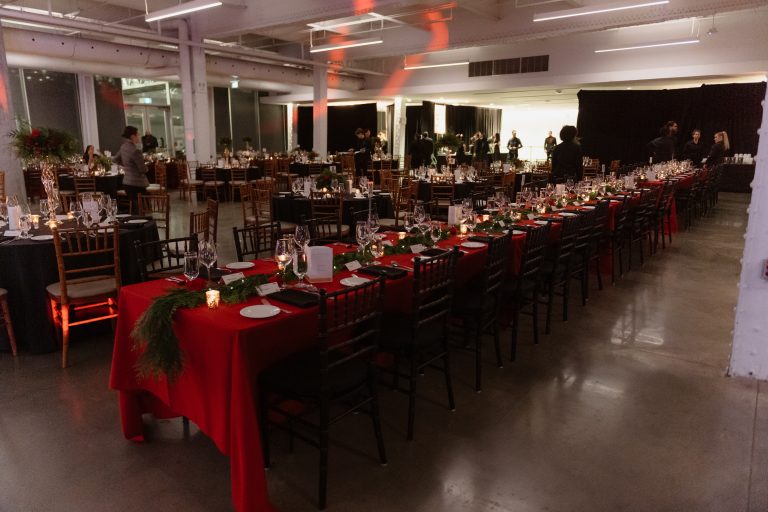
The seated banquet: the classic, unifying formula, ideal when you want speeches, tributes and a true meal. Table service avoids the scrum!
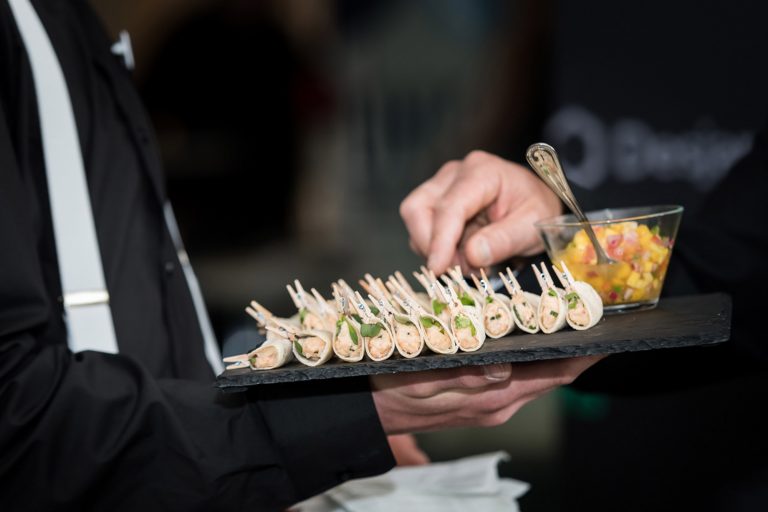
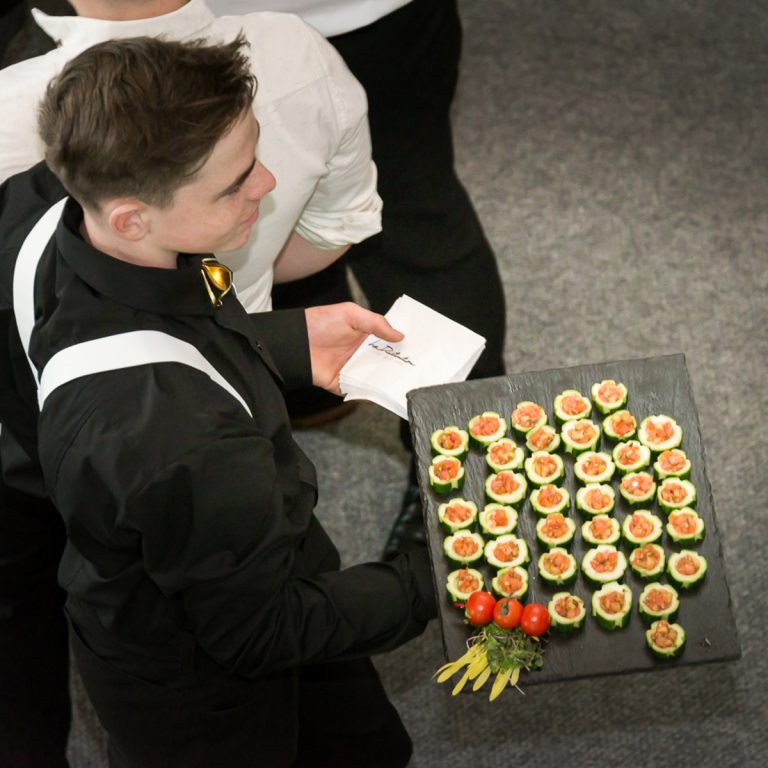
The cocktail-style reception: continuous canapés, gourmet stations and no assigned seating, perfect for mixing people and breaking up departmental cliques.
The holiday buffet: convivial and flexible; a seasonal holiday menu adds the traditional touch, gourmet edition.
The extended 5 à 7: for teams that prefer a shorter weekday formula, bites and bubbles without the logistics of a full evening.
The holiday brunch or lunch: the family-friendly option, appreciated by teams with children or atypical schedules.
Entertainment: what makes the night take off
The meal gathers people; the entertainment bonds them. The safe bets: a DJ who reads the room, a photo booth with props, door prizes people actually want, and a recognition moment with short tributes, a year-in-review and shout-outs for the great plays. Avoid marathon speeches: three five-minute moments beat an hour of presentations.
Alcohol: the fun, and the employer's responsibility
As an employer, you carry real responsibility for your guests: plan professional bar service that knows how to slow things down, appealing non-alcoholic options and above all a clear ride-home plan, such as a group shuttle, designated drivers, paid taxis or a block of nearby rooms. Announcing the plan in the invitation removes the awkwardness of asking.
The date: what if it weren't a December Friday?
December Fridays are the most in demand and the most expensive. Three alternatives are gaining ground: Thursday evenings with surprisingly strong attendance, early December or late November with better availability and rates, and the January back-to-work party, which relieves a saturated December and gives the team something to look forward to after the holidays.
Invitations: getting a real response rate
The best party in the world falls flat if half the team never signed up. Send the invitation at least six weeks ahead, with a clear RSVP deadline and a simple form for attendance, plus-one, meal choice and restrictions. Have leadership sign the invitation rather than a generic HR email, because response rates feel the difference. And plan a reminder one week before the deadline: that’s what brings in the last third of replies.
After the party: measure, and set up for next year
A short anonymous survey in the following week with three simple questions, overall rating, best moment and one suggestion, captures what hallway impressions never do. Also log the real numbers, including attendance, final cost per person and what was left at the buffet, in a debrief document. Next year you’ll start from data instead of memories, and the September booking will take an hour.
The venue: office, restaurant or reception hall?
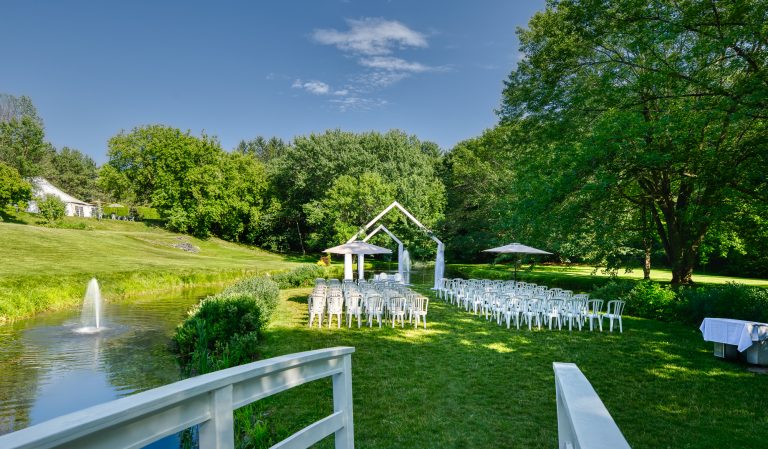
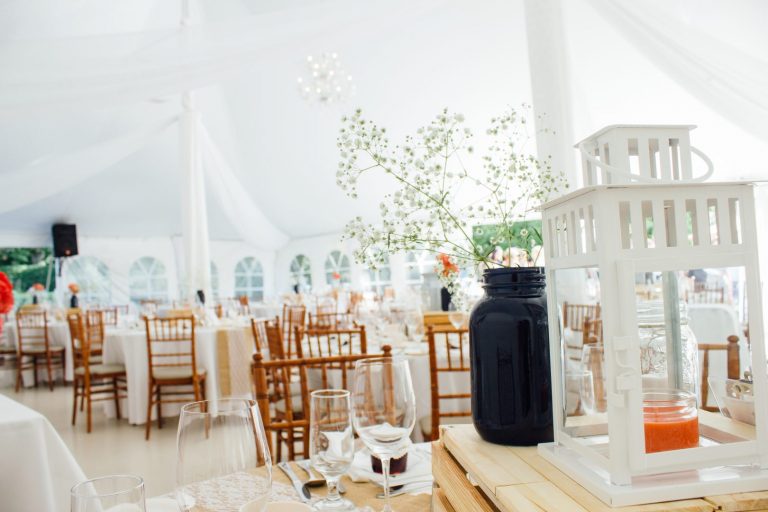
Celebrating at the office costs less, but keeps everyone in work mode. Magic rarely happens between two workstations. A restaurant suits small teams, with the limits of group menus and ambient noise. A privatized reception hall remains the most memorable formula for medium and large groups: the team changes worlds, the meal and entertainment have room to breathe, and the party becomes an event rather than a dinner. In every case, check accessibility, parking and the average travel distance for your employees before signing.
Frequently asked questions
How far ahead should we book?
For a December Friday, book the venue and caterer in June to September. For an alternative date such as Thursday, late November or January, October still leaves options.
Should spouses be invited?
It’s a company-culture choice. With spouses, the event feels more festive and familial; colleagues-only strengthens team spirit. Either way, make it clear in the invitation.
Is the office party tax-deductible?
Specific rules apply to events offered to all employees, with per-person thresholds. These rules evolve, so confirm with your accountant before finalizing the budget.
How do we handle dietary restrictions?
Collect them in the RSVP and pass them to the caterer at final confirmation. A good caterer offers vegetarian and major-allergen-free options as a matter of course.
Does a January party actually work?
Yes, and increasingly so: better availability, softer rates, rested teams and lighter calendars. It’s also an elegant way to stand out.